
How to Search for a Warrant in Dougherty County
Start your Dougherty County warrant search with the Dougherty County P2C Wanted Persons catalog. Treat it as a lead, nothing more. The county does not call the catalog complete or current, so confirm any name before acting. The Sheriff's Warrants/Civil line, reachable at 229-302-3605, can verify a warrant's status. Have the person's full legal name and date of birth ready when you call. Use each documented warrant search channel from there.
- Check the official P2C catalog without copying a person's record.
- Search the Clerk's case index for a Superior or State Court case.
- Contact Albany Municipal Court for a city citation or missed setting.
- Call Warrants/Civil, or request a narrow historical public record.
- For another county, contact that county's sheriff. Georgia has no public statewide warrant name search.
A lawyer can help you plan a safe response to a Dougherty County warrant. Georgia cautions that showing up in person may lead to custody when a warrant exists.
Dougherty County Search Starting Points
Each public tool answers a different question. P2C is a wanted-person catalog, while the Clerk CM Web Search indexes civil and criminal cases. A blank result in either one is not proof that no warrant exists. If a notice names a court, call that court first. In Dougherty County, Superior Court handles felonies, State Court takes misdemeanor and traffic matters, Magistrate Court is the main warrant-application court, and Albany Municipal Court covers city traffic and ordinance cases.
Sheriff Warrants/Civil
229-302-3605
Current county warrant confirmation.
Clerk of Court
229-431-2198
Case-index and court-record questions.
Albany Municipal Court
229-431-2865
City citation and municipal cases.
Ask which Dougherty County court issued the process, whether it remains executable, and what step comes next. Hold off on emailing sensitive identifiers until the office offers a secure method.
Dougherty County Warrant Search Fields
The Clerk's Associated Party search has the clearest verified fields in Dougherty County. Type the last name, then the first, with at least two letters and no suffix. Skip filters you are unsure of, since a wrong code, division, date, or status can bury a good result.
| Field Label | Type | Required | Notes |
|---|---|---|---|
| Associated Party Name | Text | Yes | Last name then first; two letters minimum |
| Suffix | Name | No | Do not include it |
| Court Code | Dropdown | No | Narrow only when known |
| Court Division | Dropdown | No | Separates available divisions |
| Filing Date From / To | Date range | No | Use an approximate period |
| Case Status | Dropdown | No | Not the same as warrant status |
The official blank Associated Party form documents these controls.
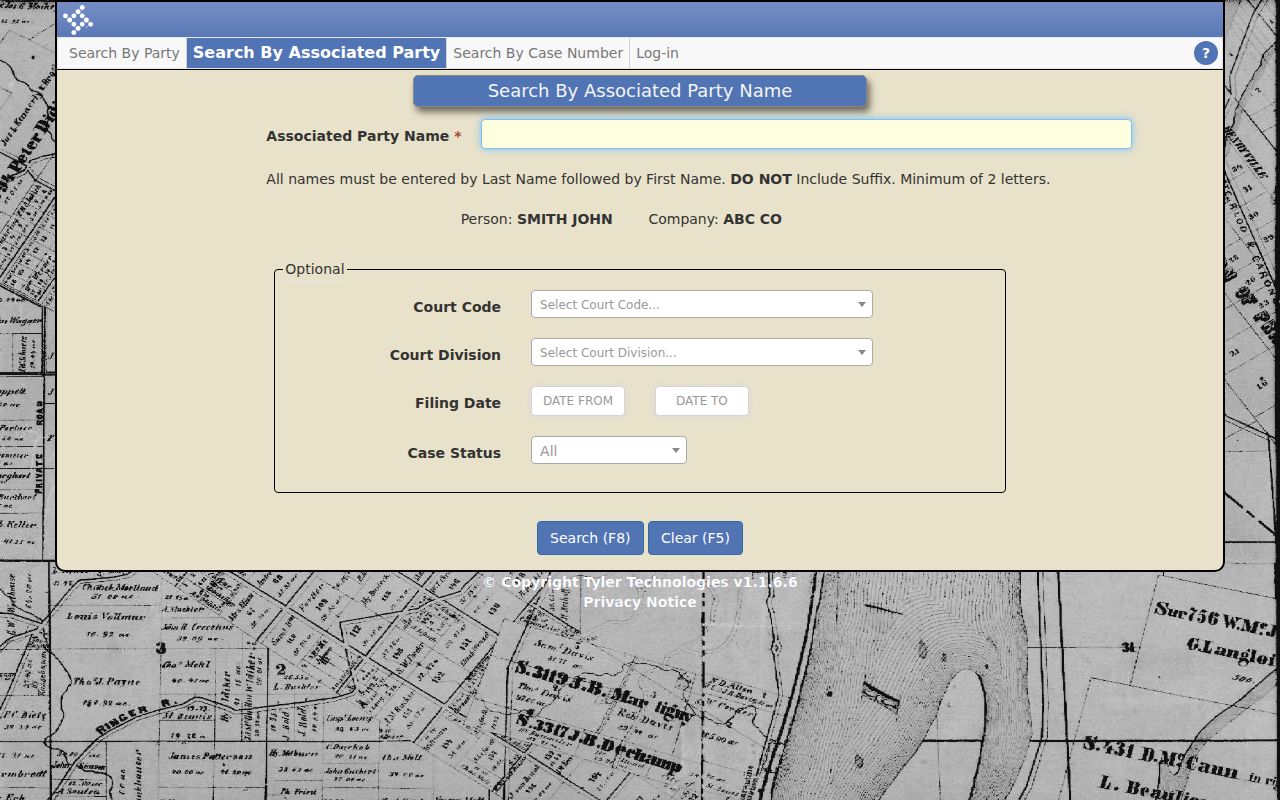
The form locates related cases. The issuing court must still confirm a warrant.
Search the Dougherty Clerk Precisely
The CM Web Search entrance opens with a public disclaimer and an acceptance step. Its base address sometimes shows a login-like screen even when the public associated-party route works, and that vendor setup can change, so assume neither a required nor an absent login. If the route redirects or fails, call the Clerk at 229-431-2198. The official CM Web Search entry states the county's public-service conditions for a Dougherty County warrant lookup.
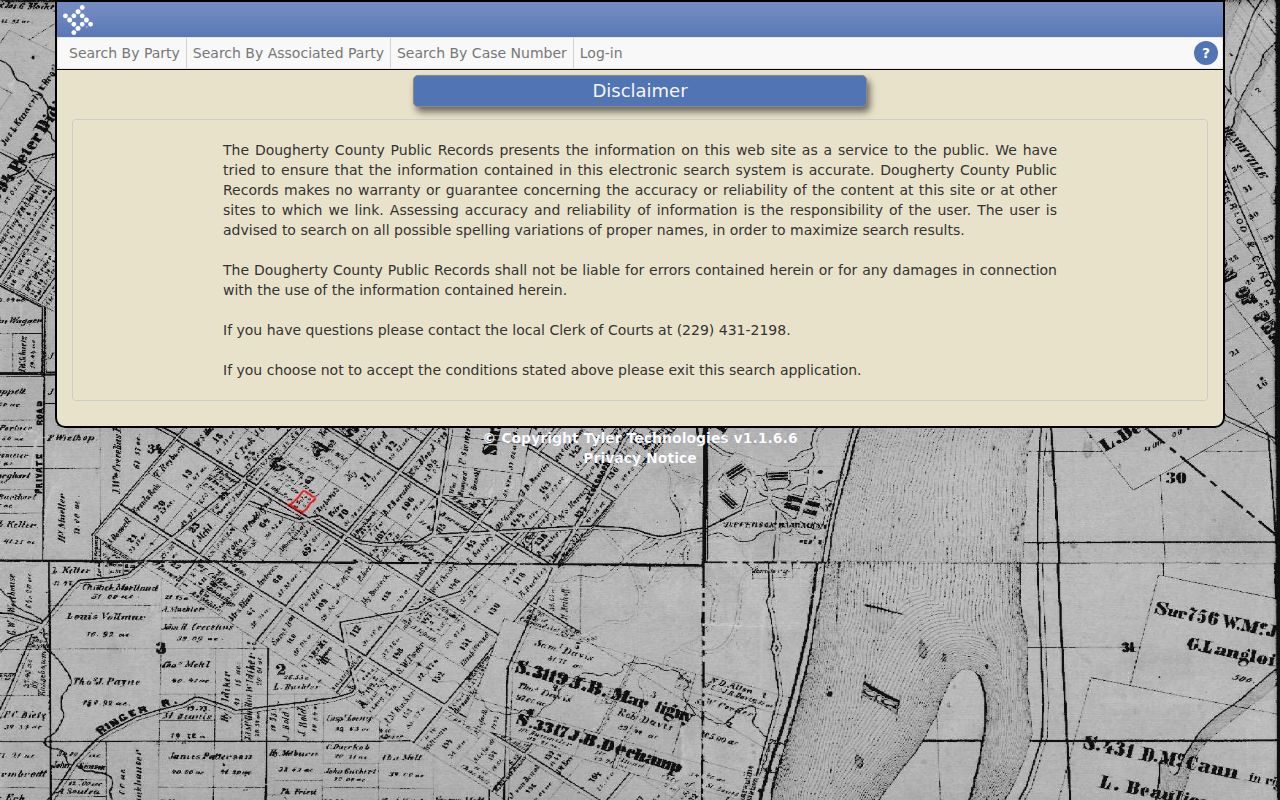
Retry without the optional filters, and try a spelling variant too. Bring the case number, court division, and filing context to the clerk. A docket trail does not prove today's warrant status in Dougherty County.
Note: An old screen capture documents an interface, not a current warrant result.
What a Dougherty County Warrant Search Returns
A public result may show only part of a record. P2C fields vary with each agency's setup. The Dougherty County Clerk index tracks cases rather than one current-warrant flag. Read the agency, court, record type, and date together, and never decide identity from a name alone.
| Warrant or Case Number | An agency identifier, represented here as REDACTED. |
|---|---|
| Record Type | Arrest warrant, wanted-person entry, bench process, traffic matter, or civil process. |
| Issuing Court | The office that controls the case remedy. |
| Charge or Matter | A field whose individual value should not be republished. |
| Bond | Possible terms that still need case-specific confirmation. |
| Status | Issued, served, recalled, withdrawn, bonded, or another condition. |
A warrant can change after the entry was written. Ask the Dougherty County sheriff or court to state its status, and note when it was confirmed.
Dougherty County Magistrate Warrant Role
Dougherty Magistrate Court handles most civilian warrant applications in Dougherty County, along with the probable-cause review behind them. The sheriff's role is different. His office serves criminal warrants. The Clerk, in turn, keeps Superior and State Court records. If you hold an application notice, go to the court named on that paper rather than assuming the P2C catalog explains it. The official Magistrate Court page lays out the court's own warrant procedure.
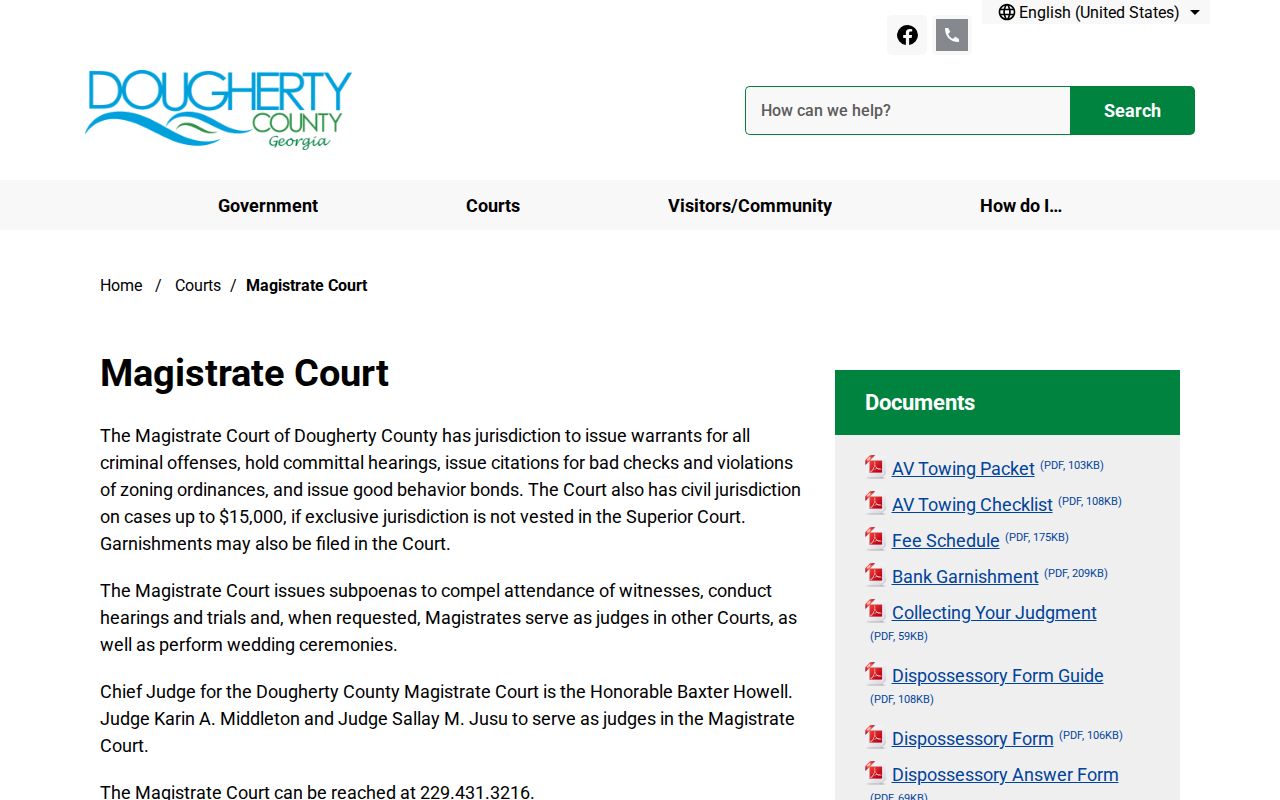
The Dougherty County Magistrate Court page lists its contact route and role in issuing warrants, though it offers no name-based warrant search.
- Issued
- A judge has authorized the process.
- Served
- Law enforcement has carried it out.
- Recalled
- The court has withdrawn it from enforcement.
- Capias
- An order to bring a person before a court; use varies by case.
Where Dougherty County Warrants Are Checked
The Sheriff's Criminal Warrants unit serves arrest warrants and court orders both in Dougherty County and for other jurisdictions. Civil Process handles subpoenas, complaints, protective orders, garnishments, writs, and dispossessory warrants; a dispossessory warrant is a civil possession process, not an arrest warrant. Court level matters too. Superior Court is the felony trial court. State Court covers misdemeanor and traffic cases, while Magistrate Court handles warrant applications and Albany Municipal Court takes city ordinance and traffic matters. Juvenile cases carry added confidentiality, and federal cases run through separate federal courts and U.S. Marshals channels. For direction, Georgia.gov warrant instructions point residents to the sheriff in the county of possible issuance, though the state offers no single public warrant search.
When Dougherty Search Tools Fail
When a Dougherty County P2C request bounces or CM Web Search sends you in a circle, work the phones. Call Warrants/Civil first. The unit can give current county warrant status. If the paper names an issuing court, call that court directly. Albany Municipal Court handles city matters. The Dougherty County sheriff's contact page lists DCJF@dougherty.ga.us for open-record requests. Say plainly what you need, whether that is a criminal warrant, a traffic failure to appear, a city case, or a civil paper. That one sentence of detail can save you a transfer to the wrong unit. Open Records works best for a narrow historic or administrative record. Name the agency, the record type, the date range, and a non-sensitive identifier. Exemptions, redactions, and reasonable costs can apply. Albany's city guidance describes a response within three business days, or a time-and-cost estimate when more work is required. Dougherty County timing should be confirmed with whichever office receives the request. For urgent warrant status, skip the records queue and call the office directly. Remember that records often sit with more than one office. The sheriff can explain its enforcement role, while the clerk or city court can explain a docket and a court order. Ask each office where its answer comes from. That habit makes it much easier to reconcile a case entry with what the warrant unit tells you about Dougherty County.
Call before an in-person visit.
Ask about the counter, hours, ID, attorney appearance, bond methods, and custody risk because no full warrant-desk schedule or ID list is published.
Access and Restricted Warrants
Some Dougherty County warrants never appear online. A warrant can be withheld while service or an investigation is pending. Sealed files stay out of any ordinary search. Juvenile matters carry special confidentiality, protected identifiers may be redacted, and the Georgia Attorney General's Open Government FAQ covers access, fees, and redaction.
Key rules:
A blank search does not prove no warrant exists.
Case status does not equal current warrant status.
Sealed, juvenile, and investigative material may be restricted.
Ask a Dougherty County office only for what your civic question truly needs. A narrow records request routes faster and steers clear of protected data.
Confirm a Dougherty Warrant Match
Treat any Dougherty County warrant search hit as a lead, nothing more. Write down where it came from. Note the time, the court, the agency, and a safe identifier. Then ask the office straight out: is this warrant active, served, recalled, withdrawn, bonded, or closed? Ask which court controls the next step, and whether a lawyer may reach that court first. The wording matters a lot. A served warrant has already been carried out. A recalled or withdrawn warrant has been pulled from enforcement by official action. A bonded case can still require a court date. No old public row can tell you which condition applies, so the current status from the issuing court is what counts. If the match points to a relative, do not confront anyone and do not post the result anywhere. Share sensitive details only with the relative, a lawyer, or the agency involved. Once a Dougherty County warrant is confirmed, ask about custody risk, bond amounts, required ID, office hours, and written proof after any court action. Keep the staff member's name or unit, the date, and every instruction you were given. When two offices give different answers, call the issuing court back and say exactly what status the sheriff reported. The Dougherty County warrant resolution overview lays out the safe sequence. Payment, a new hearing date, an attorney filing, or a bond may each play a part in a remedy, but never assume one step recalls every kind of warrant.