
Albany County-Seat Warrant Context
Albany anchors the region as county seat and central court hub. The 2020 Census counted 69,647 residents in the city itself. Dougherty County held 85,790. That scale explains why Albany packs city police, a municipal court, county courts, the Sheriff, and even a federal courthouse into one urban core. Shared geography does not merge their records. Before any warrant search, label the matter city, county, or federal straight from the document. An APD citation belongs on the Albany path. A Dougherty court caption belongs on the county path. A federal caption goes to the federal clerk, counsel, or the U.S. Marshals route, where PACER may show only public docket material. That first sorting saves calls and keeps a wrong portal from standing in as proof.
How to Check for a Warrant in Albany
Start with the document itself. An Albany Police citation points to Albany Municipal Court, while a county police, Sheriff, State Court, Superior Court, or Magistrate matter follows its own route. Georgia offers no official statewide public name-search tool. State guidance instead directs people to the sheriff of the county where a warrant may have been issued.
- Read the court, agency, citation or case number, and appearance date.
- For a city ticket or ordinance case, call Albany Municipal Court at 229-431-2865 and use its official Important Links page.
- For possible county service, call Dougherty Sheriff Warrants/Civil at 229-302-3605 and use P2C only as a starting lead.
- For a county docket, call the Clerk at 229-431-2198 or the named court.
- Ask about current status, custody risk, ID, counsel, bond, the correct office, and written proof.
A city Open Records request can produce a releasable copy, but it is no substitute for a direct status check. Georgia.gov also warns that appearing in person while an Albany warrant is active can result in custody.
Albany's Three Warrant Addresses
Albany's key offices sit blocks apart, and each does different work. The Albany-Dougherty Judicial Building at 225 Pine Avenue houses county court, clerk, and Sheriff functions. The city payment counter is at 240 Pine Avenue, Room 150. Albany Police and city court sessions use the Albany Law Enforcement Center at 201 W. Oglethorpe Boulevard. The wrong stop can delay a time-sensitive matter.
| Address | Albany warrant function | Call first |
|---|---|---|
| 201 W. Oglethorpe Boulevard | Police and municipal hearing venue | APD 229-431-2100 or court 229-431-2865 |
| 240 Pine Avenue, Room 150 | Municipal payment counter | 229-304-9513 |
| 225 Pine Avenue | County Sheriff, Clerk, and courts | Warrants/Civil 229-302-3605 |
Confirm the room and current schedule. County courthouse screening uses metal detection and x-ray.
The Albany Police Department and Municipal Court
The Albany Police Department serves the incorporated city. It posts no public warrant list of its own. For city citations, Albany Municipal Court is the practical route, and the Sheriff handles county service or custody questions. The department's official page describes the city agency and what it provides.
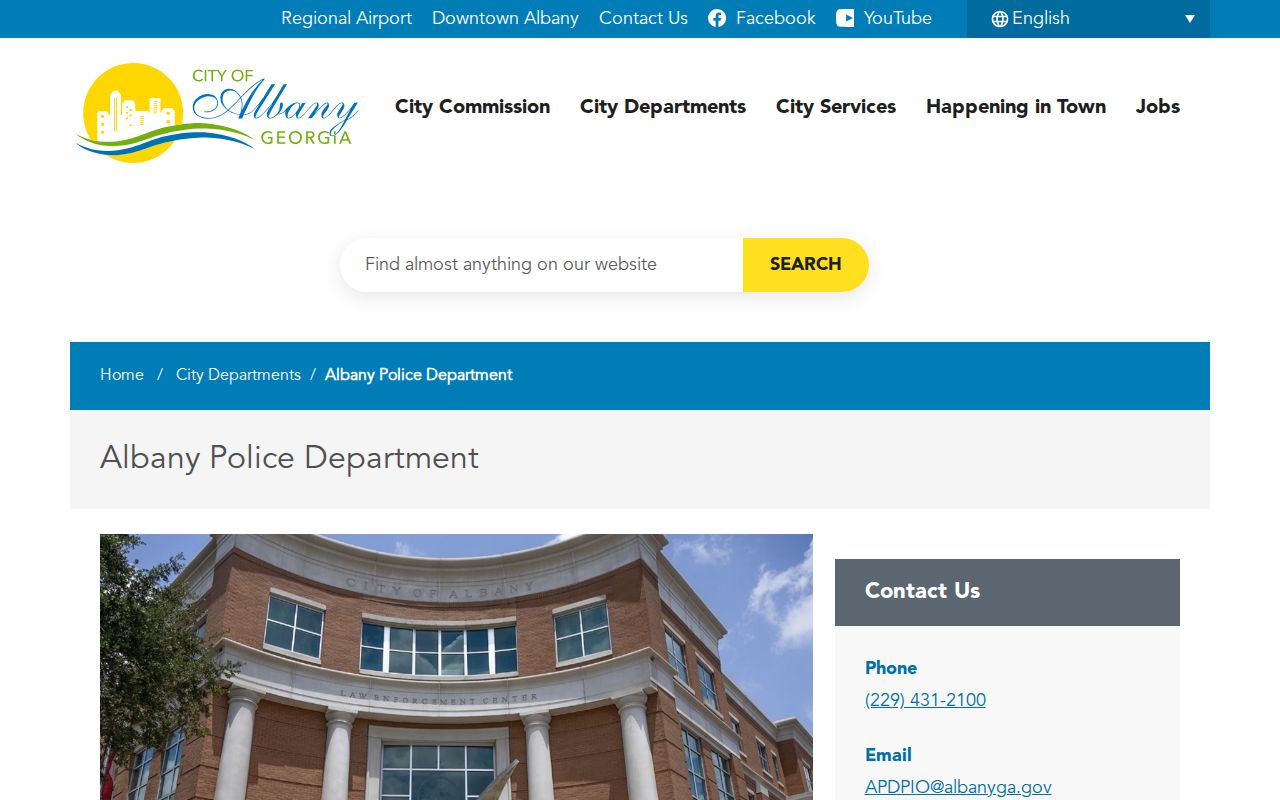
APD can identify its report or citation, but only the issuing Albany court controls the warrant and any recall.
Albany Police Department
201 W. Oglethorpe Boulevard; city police and records routing.
229-431-2100
Albany Municipal Court
City ordinance, misdemeanor, and state-traffic cases.
229-431-2865
Albany City Tickets Follow Court
Traffic routing turns on the issuing agency. Albany Police guidance sends city APD tickets to the city route at 240 Pine Avenue. Tickets written by Dougherty County Police, the Sheriff, or Georgia State Patrol follow a separate county path. Always follow the court printed on the citation. Agency and courthouse names can look alike. The Albany Municipal Court Important Links page gathers the calendar, "Pay My Ticket," ordinance lookup, Open Records, solicitor, and public-defender routes. Enter through that official city page. Paying does not itself prove that a judge recalled the warrant or that DDS finished an FTA release.
Check first: Ask Albany Municipal Court whether payment is allowed, an appearance is required, and the city warrant will be recalled.
Types of Albany Warrants
One word, several records. Knowing the type helps an Albany resident reach the right office without mixing up civil service, a city ticket, and a criminal arrest order.
| Albany warrant type | How it arises | Issuing route |
|---|---|---|
| Municipal bench warrant | Missed city court duty | Albany Municipal Court |
| Traffic warrant | Court action tied to citation | Court on ticket |
| Arrest warrant | Probable-cause finding | Authorized court |
| County bench warrant | Missed county-court duty | Assigned county court |
| Dispossessory warrant | Civil possession process | Civil court, not criminal arrest |
Juvenile and sealed matters face stricter limits. Federal warrants follow a separate federal route and may stay sealed until service.
Albany Court Sessions Change
The city page currently lists in-custody arraignments at the Dougherty County Jail Facility at 7:30 a.m. on Monday, Wednesday, and Friday. Albany arraignments and bench trials generally run at the Law Enforcement Center on Monday, Wednesday, Thursday, and Friday at 9 a.m., or just after the jail sessions. An animal and nuisance docket is separate. A holiday standing order covering 2025 to 2026 shows the trap. One dated order is never a permanent schedule. Holidays, court orders, facility conditions, and administration can all shift the Albany routine. So call the Albany court first. Confirm the setting. Ask whether the person should appear, whether counsel may act, and whether custody is possible.
Note: A public court calendar lists sessions; it does not certify the current status of an Albany warrant.
What an Albany Warrant Record Shows
A good match ties the person to the right court and identifier. Names alone can confuse. A general case label does not prove an active Albany warrant, so ask which data is current.
| Agency and court | The city or county office tied to the matter. |
|---|---|
| Case or warrant ID | A reference such as REDACTED, never a real personal number here. |
| Record type | Traffic, municipal bench, arrest, or another process. |
| Underlying duty | The citation or missed setting, not a finding of guilt. |
| Status event | Issue, service, recall, withdrawal, dismissal, or bond. |
| Next instruction | The court-directed act, location, or bond route. |
Portals can lag and may exclude sealed or juvenile records, so confirm an Albany warrant live before traveling.
Albany Open Warrant Records
The Albany City Attorney Open Records FAQ identifies the city's request route. It describes a response or estimate within three business days. Public administrative requests qualify, subject to exemptions. It is not an emergency warrant desk, and the city's own page spells out this Albany access route.
Keep an Albany request narrow: city agency, record type, date range, and a non-sensitive identifier. Never send a Social Security number or full license number by ordinary email without a secure method.
Public access: Georgia law permits many records, but sealed, juvenile, investigative, and protected details may be withheld or redacted.
Where Albany Warrants Fit With Dougherty County
The basic flow is Albany Police or Municipal Court → city record → Sheriff service or county custody when referred. A county criminal matter instead begins with the appropriate Dougherty court and uses Sheriff service. DDS receives qualifying traffic FTA notices, but DDS status is not warrant status.
Deeper county-level material lives in the Dougherty County warrant records overview. An Albany resident should still start with city court or APD when the paperwork names the city. Go county only when the document or a staff member sends you there. The P2C catalog is a lead tied to one agency, not a full register. A blank result there never proves no Albany warrant exists.
Plan an Albany Warrant Visit
Getting to the courthouse area matters almost as much as the paperwork. Albany Transit runs fixed-route and ADA paratransit service, with a transit center at 300 W. Oglethorpe Boulevard and a phone line at 229-446-2700, TTY 711. The bus can get you there. It cannot confirm a hearing, so settle that with the court first.
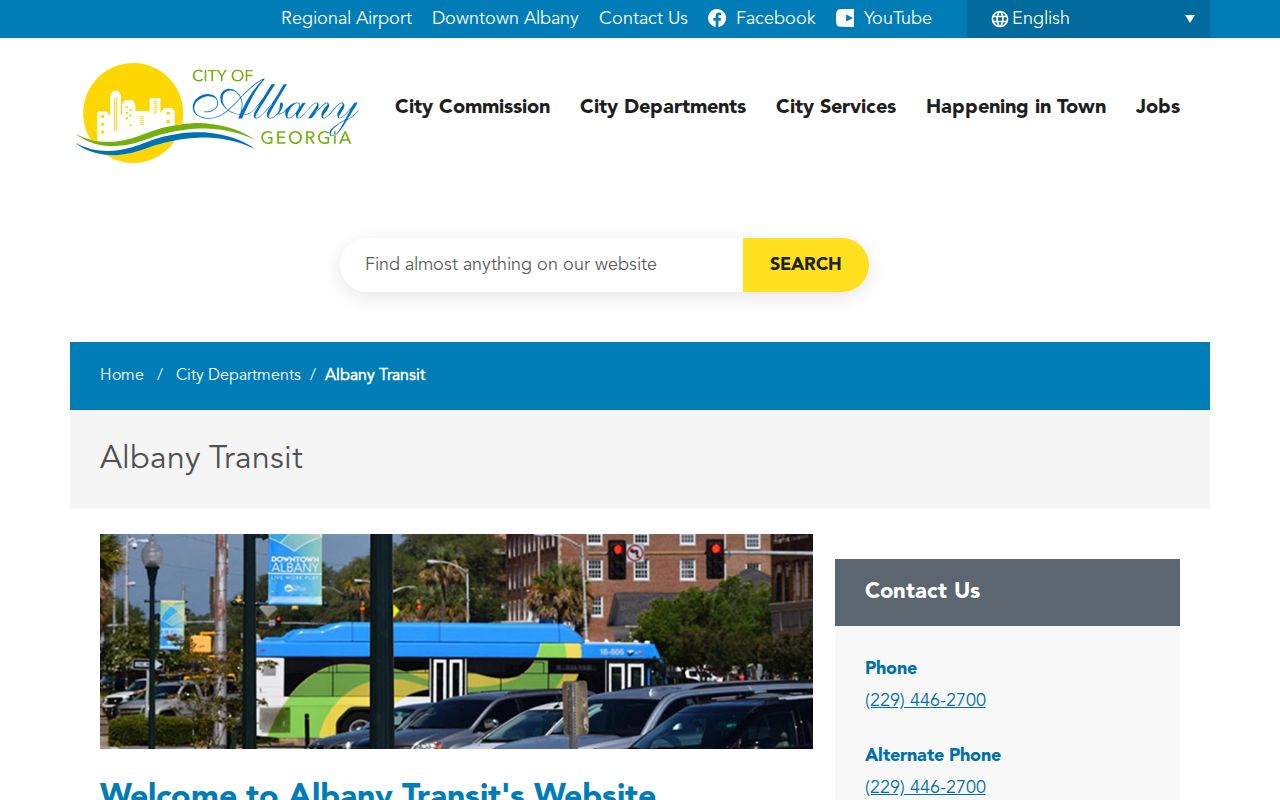
Before you head out, confirm the building, room, time, ID needs, accessibility, prohibited property, and custody risk. Write down which Albany office you are visiting, because Warrants/Civil, Criminal Records, Jail, Intake, and Bonds each answer a different question.
Public Access to Albany Warrant Records
Stick with official sources, and verify anything you find at its origin. Municipal Court explains its own docket. Albany Police Department routes a city police record, the Sheriff answers service and county custody questions, and the Clerk or assigned court holds a county file. A commercial people search replaces none of them. Hang onto every paper the process produces: the receipt, the new-date notice, the court release, a recall, a withdrawal, or bond paperwork. Ask when other systems will catch up. A row that vanishes, a zero balance, or a valid license can all be clues, but only the issuing court can confirm that an Albany warrant is no longer enforceable. Albany also stands alone among Dougherty County municipalities as an incorporated city documented through official county-specific evidence, with a 2020 Census population of 69,647 against 85,790 countywide. City, county, and federal offices sit close together in Albany, though their records stay distinct.
Albany police-record routing.
Albany's police history stretches back to the nineteenth century, but the records route you will use today is a modern support function. APD places Records and GCIC inside support services. An old report, a new citation, and a live court warrant are three different things. When you call APD, ask which court received the report or ticket, and what non-sensitive identifier the desk needs from you. Police records staff cannot predict what a judge will do, and a local criminal-history product is not a warrant certificate. Municipal Court or another issuing court remains the source for judicial status. If APD sends you to Municipal Court or the Sheriff, take that handoff. Write down the office, phone number, date, and exact instruction so later answers can be reconciled. Keep city open-record requests narrow too. Name the agency, the record type, the date range, and a non-sensitive case reference. Ask for electronic delivery or inspection as fits your need, and request a fee estimate first. Georgia guidance permits reasonable search fees after the first fifteen minutes and copying charges within the cited limit, while protected material may be redacted. A records response can document an old event, but a live call about present custody authority is something it cannot replace. When Albany offices give you different answers, compare the court name and the identifier before assuming a conflict. Municipal Court may describe the judicial order, APD the originating citation, and Sheriff staff the service record. Ask when each record last changed, and what document proves the next step. That discipline keeps an Albany warrant search aimed at resolution instead of treating a partial portal result as a final certificate.