
Bench Warrants in Dougherty County
A Dougherty County bench warrant is a court order that usually follows a missed hearing, a broken court order, or some other undone step in a case already open. Georgia court rules also use the terms "order for arrest" and "capias" in related settings, and a capias simply directs that a person be taken into custody. It is not a new criminal charge. The label matters less than the remedy, and only the issuing court can say what it ordered. Keep in mind that a missed date alone does not prove an active bench warrant exists. The Uniform Magistrate Court Rules cover written excuses, judicial discretion, and possible contempt proceedings, and the citation rules carry similar notice and reasonable-excuse provisions. For a firm answer on one Dougherty County case, ask the court directly.
Dougherty County Bench Warrant FTA
Failure to appear, often written as FTA, starts life as a court event, so the first job is finding the right docket. Dougherty State Court handles many misdemeanors and traffic cases. Superior Court takes felonies. Magistrate Court holds criminal-warrant and committal authority, while Albany Municipal Court covers city ordinances, misdemeanors, and state traffic matters inside the city. The official Dougherty Clerk of Court page routes you to the civil and criminal case search and lists 229-431-2198 for help. A docket entry or FTA notation is not by itself proof of a live bench warrant; the clerk or assigned court must read the current order. For a Dougherty County warrant search beyond the courts, the agency-linked Dougherty P2C catalog is only a starting lead, since Georgia offers no statewide public name search. Sheriff Warrants/Civil at 229-302-3605 is the direct county fallback. A narrow request to DCJF@dougherty.ga.us may produce an available record copy, but it is slower than calling and remains subject to legal redaction or withholding. The linked Clerk page shows how public court access is organized in Dougherty County.
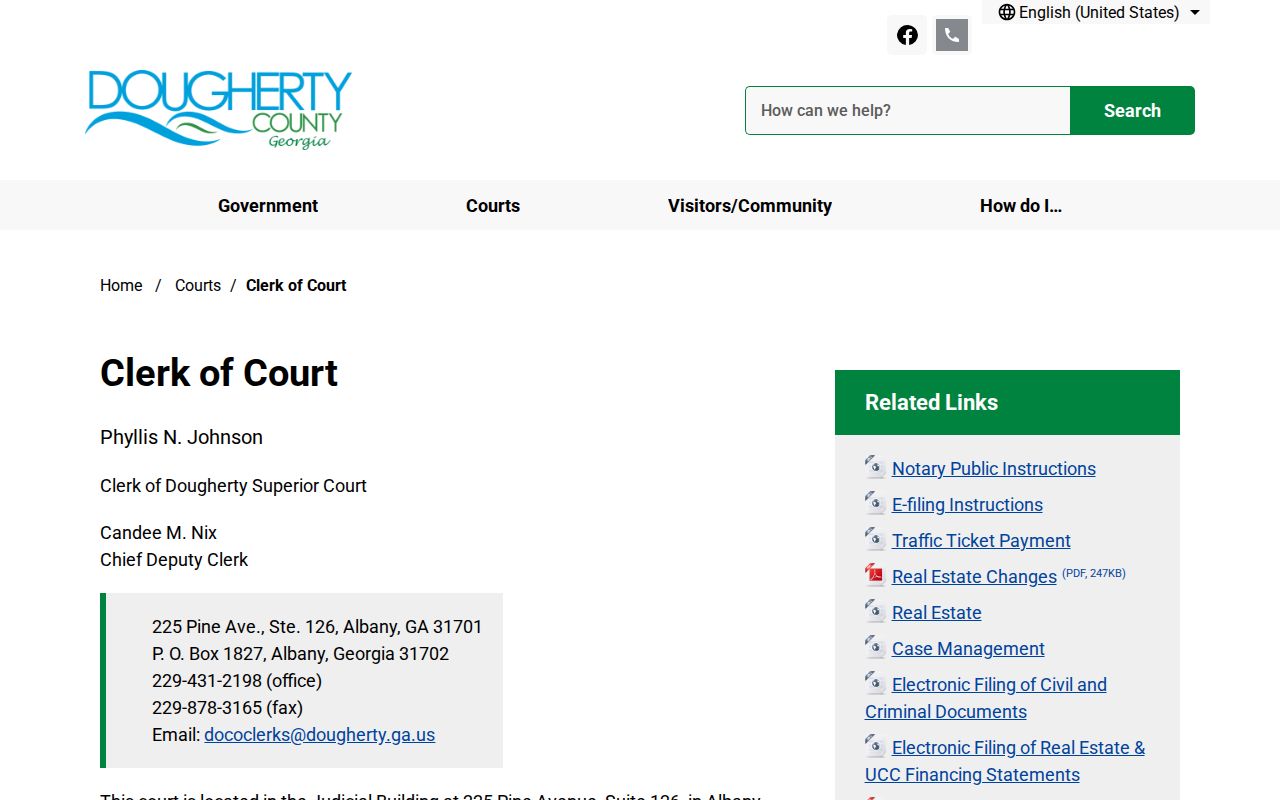
This official view of the clerk's office backs the court-first route for tracing the docket behind a possible Dougherty County bench warrant.
How a Bench Warrant Is Issued
A judge in Dougherty County can act after a defendant skips a required setting or ignores an order. The judge weighs the record, any notice, and any excuse the rules allow. If arrest is ordered, the court records that act and feeds the process to the systems used by the responsible court and law-enforcement agency. Public sites may lag behind that update.
The useful process line is: required setting → nonappearance or noncompliance → judicial review → bench warrant or other court response → service, recall, or later hearing. Each arrow is a distinct event. The Sheriff does not replace the judge’s decision, and the mere payment of money does not guarantee recall.
Dougherty County Warrant Vocabulary
Short terms like these show up throughout Dougherty County court and warrant records. Knowing the difference lets a caller ask a narrow question and keeps an old notice from being mistaken for current authority.
- FTA
- Failure to appear for a required court date.
- Capias
- A court order directing that a person be taken into custody.
- Recall or withdrawal
- A later official court action that removes or ends the warrant authority.
- Quash
- A judicial act that sets aside an order or process.
- Served
- The custody process has been carried out; it is not the same as issued.
Ask the issuing court for the exact status term in its own system. In Dougherty County, "closed case," "paid," and "not shown online" do not necessarily mean a warrant was recalled.
Bench Warrant vs Arrest Warrant
Both instruments can put a person in custody, but they begin for different reasons. A bench warrant in Dougherty County usually grows out of an existing case and a missed duty. An arrest warrant rests on a judicial finding of probable cause tied to an alleged offense. The companion discussion of Dougherty County arrest warrants follows that separate path.
| Feature | Bench Warrant | Arrest Warrant |
|---|---|---|
| Typical trigger | Missed setting or failure to comply | Probable cause of an offense |
| Starting point | An existing court matter | A complaint or warrant request |
| Judicial act | Order from the assigned judge | Judicial review and issuance |
| Next step | Ask that court about appearance or recall | Plan surrender, bond, and first appearance |
The title on the actual document controls. Confirm any public catalog label with Dougherty County before making travel or appearance plans.
Dougherty County Bench Warrant Boundaries
Not every official-looking record belongs in the criminal bench-warrant lane. Juvenile matters carry firm confidentiality limits in Dougherty County, and probate orders for evaluation or commitment are not criminal arrest warrants. Those courts' public pages help identify jurisdiction but expose no case-level warrant data. The Dougherty Juvenile Court page shows that court's jurisdiction and contact route.
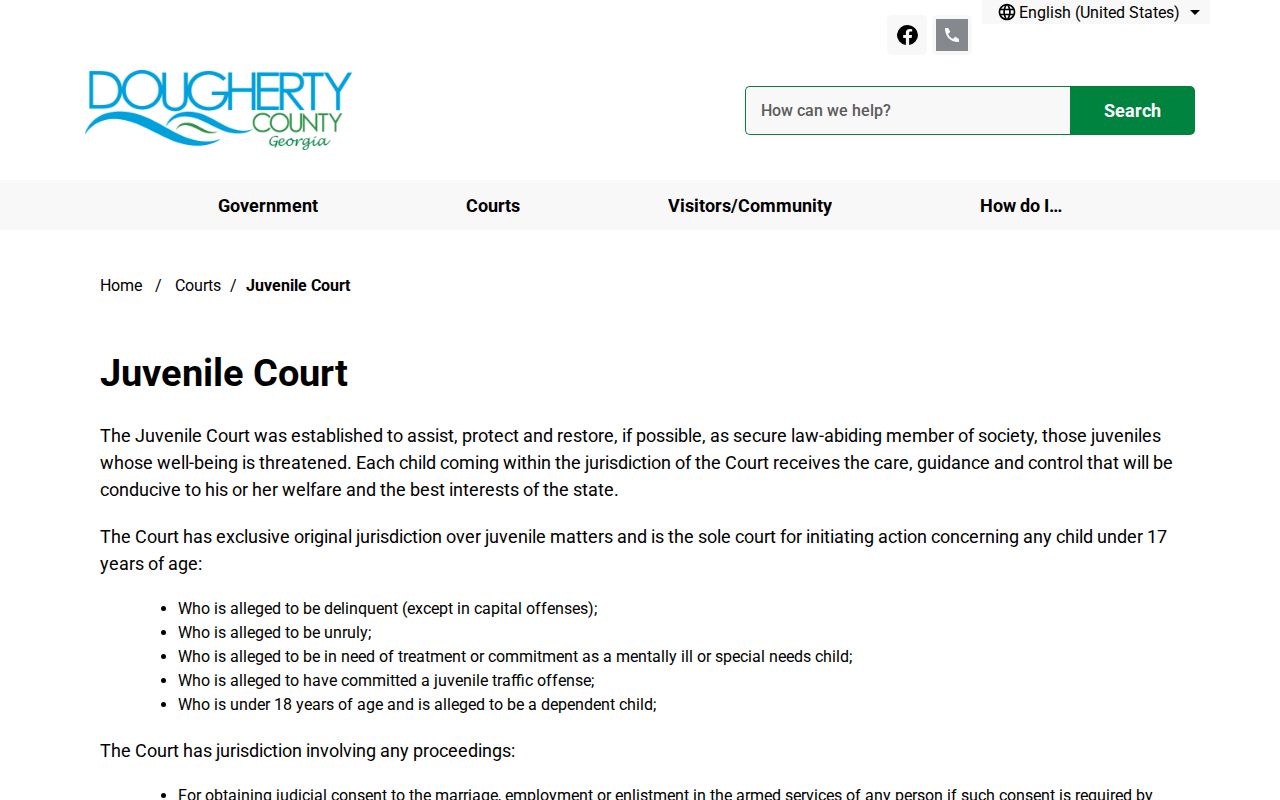
That page is a reminder that juvenile names and identifying case facts never come from a general warrant search. The Dougherty Probate Court page gives the matching route for probate jurisdiction in Dougherty County.
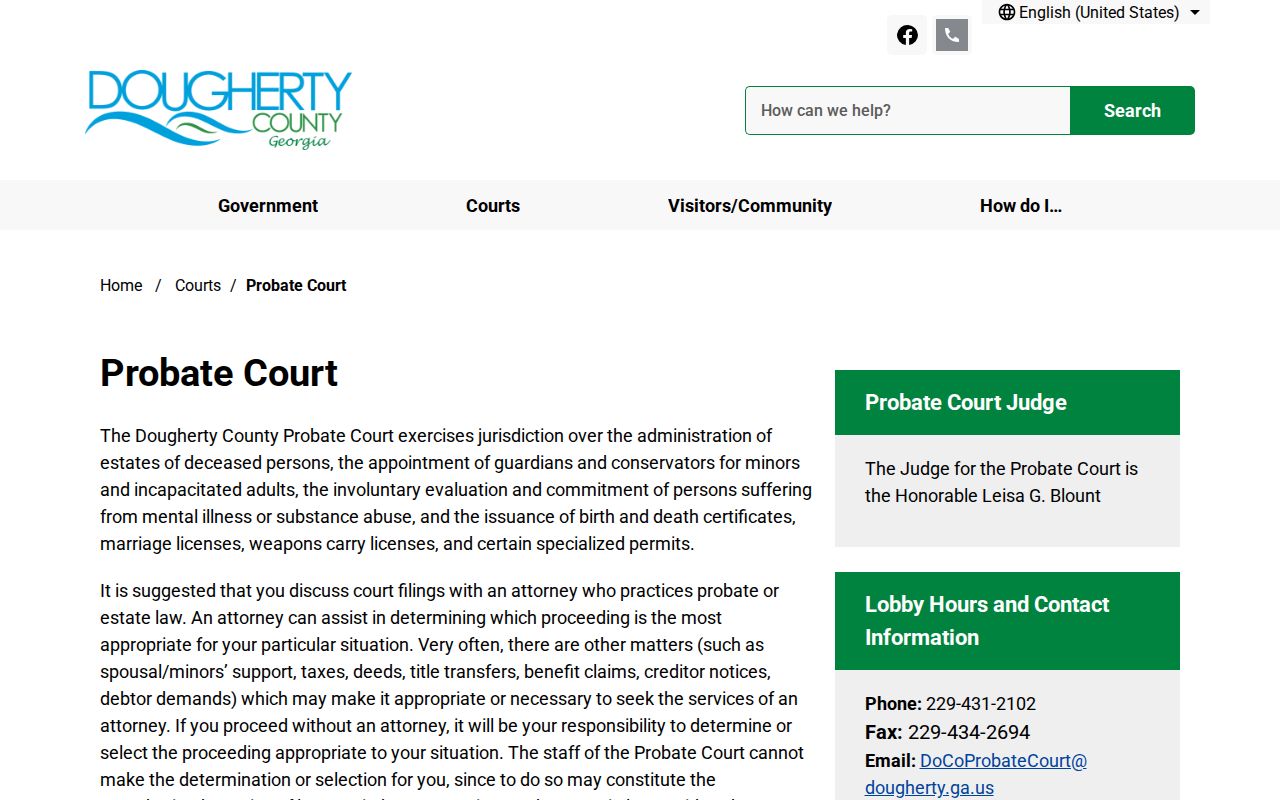
This second court view helps keep probate process separate from a Dougherty County criminal bench warrant.
How to Resolve a Dougherty County Bench Warrant
Resolution starts with the Dougherty County court that issued the order. Before you appear, ask about custody risk, the warrant's current state, counsel, identification, bond, and whether a motion or hearing is required. Georgia.gov warns that appearing where a warrant exists can mean being taken into custody.
- Read the notice for the court, case or citation number, and missed date.
- Call the issuing clerk and ask what order is now in force.
- Consult a lawyer about a recall or quash motion and safe appearance.
- Follow the court’s instruction for payment, a new date, bond, or surrender.
- Keep the receipt or order and confirm that the docket was updated.
Caution: A payment, an old search result, or a portal that shows nothing does not mean a Dougherty County bench warrant has been recalled.
Dougherty County Bench Warrant Call Prep
Get your facts straight before you dial. Write the name exactly as printed on the notice. Add the case or citation number and the court. Ask which secure method the office accepts before emailing a birth date or other identifier, and ask whether the court will speak with you directly or expects counsel to act. In Dougherty County, Dougherty State Court lists 229-431-2152, Magistrate Court 229-431-3216, Albany Municipal Court 229-431-2865, and Sheriff Warrants/Civil 229-302-3605. Each office has its own role. The wrong desk may give you only a partial answer on a bench warrant. Note: the Sheriff contact page posts no warrant-desk schedule or full identification policy, so call before visiting.
Which Dougherty County Court Issued It
The issuing court controls its bench warrant. State Court handles many misdemeanors. Superior Court is the felony trial court, while Magistrate Court issues criminal warrants and holds committal hearings. Albany Municipal Court takes city citations and ordinance cases. A Superior Court calendar can show a scheduled proceeding, but a calendar is not a warrant list for Dougherty County. The Dougherty District Attorney page shows how prosecution routes across Superior, State, and Juvenile matters.
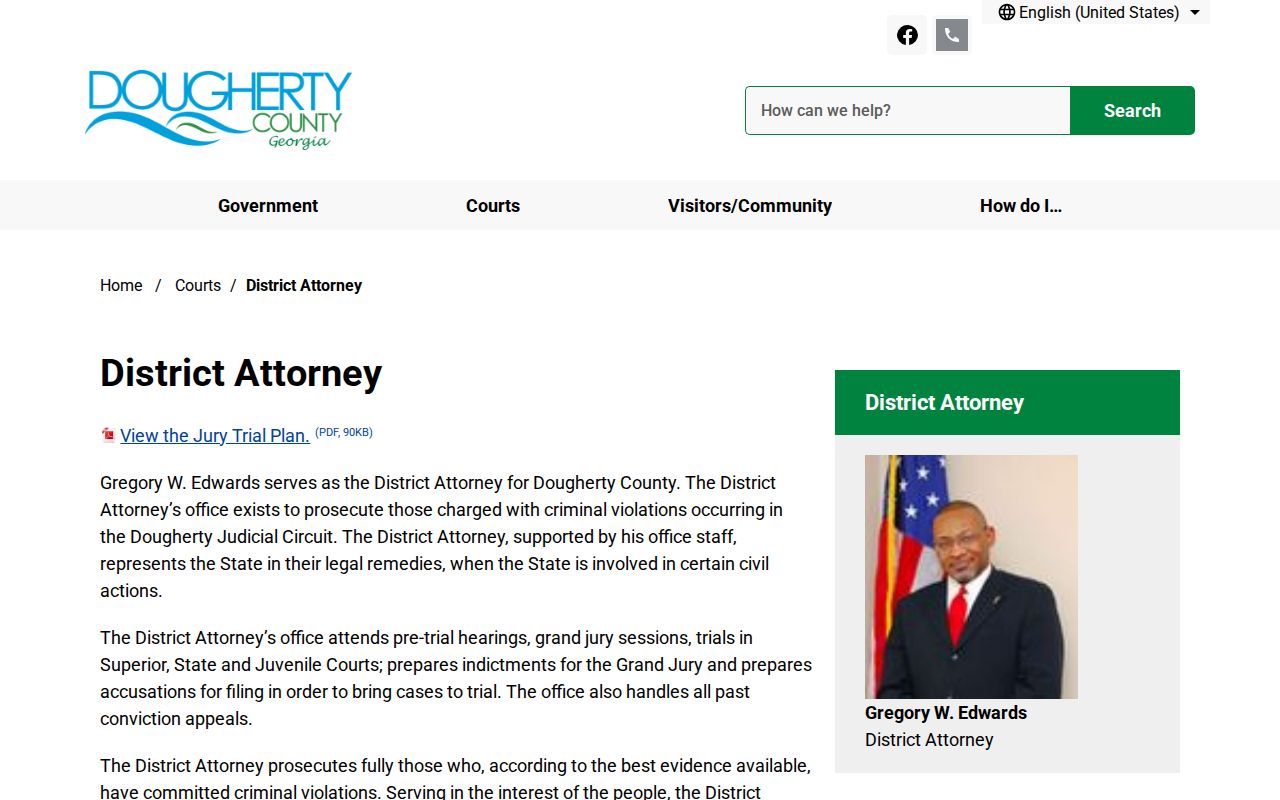
The Dougherty County prosecutor's page maps the case lane, but the DA is not a general warrant-search desk.
Keep Dougherty County Bench Warrant Proof
Keep every paper that matters. Save written instructions, payment receipts, new setting notices, releases, withdrawals, dismissals, and any recall order. Then ask the Dougherty County clerk when the docket should show the change. The court and the Sheriff may not update their public systems at the same moment, so a copy of the judge's order carries more weight than an old search result pulled from your phone. If the missed date involved traffic, check with the Georgia Department of Driver Services on its own after the court sends a release. A DDS suspension is not a warrant status. Court resolution can also finish before DDS processing does. Confirm both systems instead of treating either one as proof of the other.